
/ CONDITIONS / SESAMOIDITIS
Sesamoiditis
Pain under the ball of the foot near the big toe — from inflamed or injured sesamoid bones. Common in dancers, runners, and athletes who load the forefoot repeatedly.
Andrew Gunter, DPM — San Antonio, TX.
Call (210) 581-9800
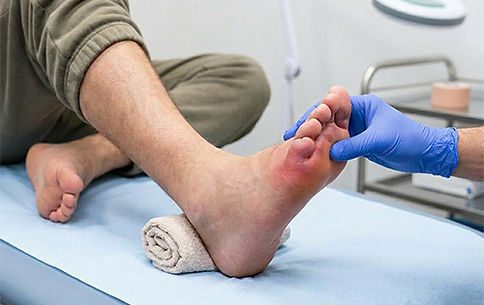
What Are the Sesamoids and What Is Sesamoiditis?
The sesamoid bones are two small pea-sized bones embedded within the flexor hallucis brevis tendon beneath the first metatarsal head — the ball of the foot at the base of the big toe. They function as a pulley for the flexor tendon, absorb weight-bearing forces under the first metatarsal head, and protect the flexor hallucis longus tendon as it passes beneath the joint. Every step loads the sesamoids — and activities that increase forefoot pressure, such as running, jumping, dancing, and wearing heeled footwear, substantially amplify this loading.
Sesamoiditis refers to inflammation of the sesamoid bones and their surrounding structures — the fibrocartilaginous sesamoid-metatarsal articulation, the surrounding bursae, and the flexor tendon complex. It produces pain directly under the first metatarsal head that is characteristically worst with push-off, worse with barefoot walking on hard surfaces, and relieved by reducing forefoot loading. The condition develops gradually from repetitive overloading rather than from a single injury event in most cases.
An important clinical distinction is between sesamoid inflammation (sesamoiditis) and sesamoid fracture. A stress fracture of the sesamoid — the tibial sesamoid is more commonly fractured — produces a similar pain pattern but may not respond to conservative sesamoiditis management. Standard X-rays can be difficult to interpret because of the bipartite sesamoid — a normal anatomical variant in which the tibial sesamoid develops in two separate fragments rather than one, affecting an estimated 10 to 30 percent of individuals. A bipartite sesamoid can be mistaken for a fracture on X-ray; a stress fracture can be dismissed as a bipartite sesamoid. MRI and bone scan provide the most reliable distinction between the two.
Dancers — particularly those in ballet and other styles requiring sustained demi-pointe and relevé — are among the highest-risk populations for sesamoiditis and sesamoid stress fracture. The prolonged forefoot loading demands of dance place exceptional chronic stress on the sesamoid complex. Runners with a high arch foot type and those who run primarily on the forefoot are also at elevated risk.
Dr. Gunter evaluates sesamoid pain with careful X-ray interpretation, clinical palpation of the individual sesamoids, and advanced imaging when the diagnosis is uncertain or treatment is not progressing as expected.
COMMON SYMPTOMS:
-
Pain directly under the ball of the foot at the big toe
-
Worst with push-off during walking, running, or jumping
-
Worsened by barefoot walking on hard surfaces
-
Worsened by heeled footwear
-
Tenderness with direct pressure on the sesamoid bones
-
Swelling under the first MTP joint
-
Gradual onset — not typically from a single injury
MOST COMMONLY AFFECTED:
-
Dancers — especially ballet, high demi-pointe demand
-
Runners — particularly forefoot strikers
-
Athletes in jumping or cutting sports
-
Those with a high arch foot type
-
Those who regularly wear heeled footwear
-
Athletes who have recently increased training load
-
Patients with a prominent first metatarsal head
Treatment Options for Sesamoiditis
Treatment depends on whether the sesamoid is inflamed, fractured, or both — and on the severity and duration of symptoms. Dr. Gunter establishes the diagnosis before recommending any treatment approach.
Activity modification & forefoot offloading
Reducing the forefoot loading that is driving sesamoid inflammation is the foundation of conservative management. For dancers, this may mean modifying technique temporarily. For runners, reducing mileage and avoiding forefoot-loading intervals. Dr. Gunter advises on specific modifications matched to the patient’s activity demands.
Custom orthotics with sesamoid relief
Custom orthotics with a first metatarsal head cutout or sesamoid relief pad redistribute forefoot pressure away from the inflamed sesamoid bones — reducing the chronic loading driving inflammation with every step. One of the most effective conservative interventions for sesamoiditis. Dr. Gunter fabricates orthotics in-office with a one-week turnaround.
Protective padding & accommodative taping
Sesamoid padding and dancer’s padding techniques offload the sesamoid directly within the shoe. Taping that limits first MTP dorsiflexion reduces the compressive force at the sesamoid-metatarsal articulation during push-off. Dr. Gunter advises on appropriate padding and taping at your appointment.
Sesamoid fracture management
Confirmed sesamoid stress fractures require a more protective management course than sesamoiditis alone — typically including a period of non-weight-bearing or very limited weight bearing to allow bone healing. Refractory non-healing sesamoid fractures may ultimately require sesamoidectomy. Dr. Gunter discusses sesamoid fracture management specifically when imaging confirms fracture rather than inflammation alone.
Related conditions: Turf toe & plantar plate injuries · Ball of foot pain & metatarsalgia · Hallux limitus · Custom orthotics
Why Patients Choose Dr. Gunter
✓
5,000+ Patients
Helped
✓
Same-Day
Appointments
Available
★
5.0 Average
Google Rating
✓
100% Focused
on Foot & Ankle
Frequently Asked Questions — Sesamoiditis
Pain under the ball of your foot near the big toe?
Get an accurate diagnosis first.
Dr. Andrew Gunter, DPM evaluates sesamoid pain carefully — distinguishing sesamoiditis from sesamoid fracture and from bipartite sesamoid — and recommends treatment matched to the specific diagnosis. Serving San Antonio and surrounding communities, including dancers, runners, and active adults. Same-day appointments available. Most insurance plans accepted.
Call (210) 581-9800