
3D Printed Custom Orthotics
Precision-engineered orthotics built specifically for your feet — using advanced digital 3D scanning and in-office fabrication. Ready in about one week. A fraction of what retail stores charge.
Andrew Gunter, DPM — San Antonio, TX.
Call (210) 581-9800
Not All Orthotics Are Created Equal
If you have ever been told you need custom orthotics, you have probably encountered a few frustrating realities: the cost is significant, and the wait is long. Occasionally the end product might be underwhelming for the cost you paid. Traditional custom orthotics are typically fabricated by an outside laboratory from foam or plaster impressions of your feet — a process that takes weeks and adds layers of cost between you and your insole.
Then there is the retail alternative. Stores like The Good Feet Store sell expensive arch support systems under the language of 'custom' — but these are pre-manufactured products selected for your foot type, not fabricated from a precise measurement of your individual anatomy. They are not custom orthotics in any clinical sense of the word. And they often cost more than a thousand dollars.
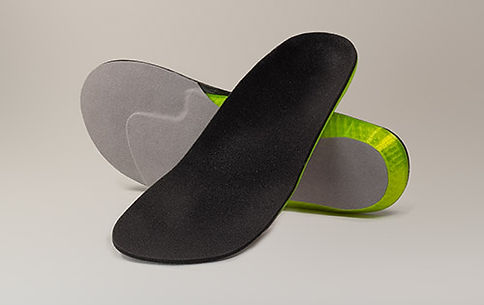
Dr. Andrew Gunter has built a different model entirely. Using precision digital 3D scanning technology, he captures an exact three-dimensional measurement of your foot — far more accurate than a foam impression or a pressure mat reading. Far more accurate than an off-the-shelf orthotic. That data drives the fabrication of an orthotic shell printed in-office using a medical-grade TPU 95A material, which provides the ideal balance of structural support and patient comfort. Dr. Gunter then completes the orthotic with any necessary top cover, wedging, or modifications specific to your diagnosis and biomechanics.
The result is a genuinely custom orthotic — built from your exact anatomy, completed in about one week, priced reasonably, and a significant fraction of what retail stores ask for a product that is not truly custom at all.
A SUMMARY:
-
Precision digital 3D scanning
-
In-office fabrication — no outside lab
-
TPU 95A medical-grade shell material
-
Ready in approximately one week
-
Completed with top cover, wedging & modifications
-
Insurance submitted first when requested
-
A fraction of typical retail costs
How Your 3D Printed Orthotics Are Made
The entire process — from your first appointment to holding your finished orthotics — takes approximately one week. Every step happens with Dr. Gunter's direct involvement.
Step 1
Step 2
Step 3
Precision 3D Scan
In-Office Fabrication
Finishing & Fitting
At your appointment, Dr. Gunter performs a comprehensive biomechanical evaluation and captures a precise three-dimensional scan of your feet using advanced digital scanning technology. The scan captures the exact contours of your foot anatomy with a level of accuracy that foam impressions and pressure mat readings cannot match.
Dr. Gunter designs your orthotic from the scan data, incorporating any modifications specific to your diagnosis, activity level, and footwear. The shell is then printed in-office using medical-grade TPU 95A — a thermoplastic material that provides firm structural support while maintaining enough flexibility for all-day comfort.
Once the shell is complete, Dr. Gunter adds the top cover, any required wedging, and any other modifications to finish the orthotic to your specific prescription. You return to the office for a fitting and adjustment appointment — typically within about one week of your scan — and leave with your finished orthotics.
The Technology Behind Your Orthotics
Precision digital 3D scanning
Digital 3D scanning captures the geometry of your foot with sub-millimeter precision — far exceeding the accuracy of traditional foam box impressions or plaster casting. The resulting three-dimensional model forms the exact foundation for your orthotic design, ensuring that the support structures align precisely with your anatomy rather than approximating it.
TPU 95A shell material
The orthotic shell is printed in TPU 95A — a medical-grade thermoplastic polyurethane. The 95A shore hardness rating reflects the material's specific balance: rigid enough to provide meaningful biomechanical correction and hold up to sustained body weight through thousands of steps, yet with enough inherent flex to remain comfortable throughout the day. This is not a rigid plastic shell. It is an engineered material chosen for this application specifically.
In-office fabrication — no outside lab
Because the orthotic is fabricated entirely in Dr. Gunter's office, there is no laboratory middleman, no shipping delay, and no loss of precision in translation. Dr. Gunter oversees every step from scan to finished product — and any adjustments needed at the fitting appointment can be made immediately rather than requiring a weeks-long lab revision cycle.
Custom finishing for your diagnosis
The 3D-printed shell is the foundation — not the finished product. Dr. Gunter completes each orthotic with a top cover selected for your activity level and footwear, any necessary rearfoot or forefoot wedging to address your specific biomechanical findings, and any other modifications required by your diagnosis. The finished orthotic is a prescription device, not a generic product.
What Makes These Orthotics Different
Not all orthotics are the same — and the differences matter for your outcomes, your timeline, and your wallet.
Truly custom to your anatomy
Dr. Gunter — 3D Printed
Yes — fabricated from your precise 3D scan
Retail Orthotic Stores
No — pre-manufactured products selected by foot type
Physician-prescribed & designed
Yes — Dr. Gunter designs every orthotic
No — retail staff, not licensed physicians
Fabrication method
In-office 3D printing
Factory-manufactured; selected from inventory
Turnaround time
Approximately one week
Same day (pre-made)
Modifications & adjustments
Yes — at fitting and follow-up
Not available — product is fixed
Cost
A fraction of most practices and retail
Typically $1,000+ for non-custom products
Insurance submission
Yes — submitted on your behalf when requested
Generally not covered
Pricing & Insurance
One of the most significant advantages of Dr. Gunter's in-office 3D printing model is cost. By eliminating the outside laboratory, the shipping, and the markup layers that inflate the price of traditionally fabricated orthotics, Dr. Gunter is able to provide genuinely custom prescription orthotics at a very reasonable and fair price — and at a significantly lower cost than retail orthotic stores, which often charge over a thousand dollars for products that are not clinically custom at all.
The price difference is not a reflection of quality. It is a reflection of a more efficient process and a deliberate choice to make high-quality care accessible.
For patients who would like to use insurance, Dr. Gunter's office will submit a claim on your behalf. Coverage for custom orthotics varies significantly by plan — some plans cover orthotics with a copay after prior authorization, others do not cover them at all. We verify your specific coverage before your appointment so there are no surprises. Call (210) 581-9800 to ask about your plan.
For patients paying out of pocket, the cost is straightforward and very competitive. Call the office for current pricing.
Why Patients Choose Dr. Gunter
✓
5,000+ Patients
Helped
✓
Same-Day
Appointments
Available
★
5.0 Average
Google Rating
✓
100% Focused
on Foot & Ankle
Frequently Asked Questions — 3D Printed Custom Orthotics
Ready for orthotics that are actually built for your feet? Book today.
Precision 3D scanning, in-office fabrication, one-week turnaround, and a price that makes genuinely custom orthotics accessible. Dr. Andrew Gunter, DPM — serving San Antonio and surrounding communities. Call to ask about current pricing and insurance coverage.
Call (210) 581-9800