
/ CONDITIONS / METATARSAL FRACTURES
Metatarsal Fractures
The metatarsals are the five long bones of the midfoot — the most commonly fractured bones in the foot after the toes. Whether from a direct blow, a twisting injury, or the slow accumulation of repetitive stress, metatarsal fractures range from minor injuries that heal with a walking boot to high-risk fractures that require surgical fixation for reliable healing.
Andrew Gunter, DPM — San Antonio, TX.
Call (210) 581-9800
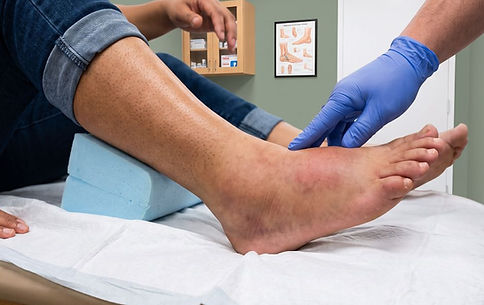
Understanding Metatarsal Fractures
The foot has five metatarsals — numbered first through fifth from the great toe side to the little toe side. Each metatarsal has a base (proximal end near the midfoot), a shaft, a neck, and a head (distal end near the toes). Fractures can occur at any of these locations, and the significance of the fracture depends heavily on which metatarsal is involved and where on that bone the fracture occurs.
First Metatarsal Fractures
The first metatarsal is the largest and bears the most load during walking and push-off. Fractures of the first metatarsal are less common than fractures of the lesser metatarsals but are more functionally significant. Displaced or intra-articular first metatarsal fractures frequently require surgical fixation because malunion can significantly alter weight distribution across the forefoot and lead to chronic pain or transfer metatarsalgia.
Central Metatarsal Fractures (2nd, 3rd, 4th)
The central metatarsals are the most commonly fractured from direct trauma — dropping a heavy object on the foot, a crush injury, or a twisting mechanism. Because the central metatarsals are bound together by the deep transverse intermetatarsal ligament, single non-displaced fractures often heal well with conservative management. Multiple metatarsal fractures, significantly displaced fractures, and fractures with significant dorsal or plantar angulation require more careful evaluation — angular deformity can cause painful prominence under the metatarsal head during weight bearing.
Neck Fractures
Fractures through the narrow neck of the metatarsal — between the shaft and head — can be deceptively difficult to manage. Significant dorsal angulation of the metatarsal head following a neck fracture can cause the head to become prominent on the plantar surface during weight bearing, producing a painful callus that persists long after the fracture heals. Metatarsal neck fractures with more than a few degrees of plantar angulation often require reduction.
Metatarsal Stress Fractures
Metatarsal stress fractures are covered in detail on our dedicated stress fractures page →
SIGNS YOU MAY HAVE A METATARSAL FRACTURE:
Patients with metatarsal fractures often report being told they 'just sprained' their foot. Midfoot pain following trauma or a period of increased activity warrants imaging — not every painful foot is a sprain, and the consequences of a missed metatarsal fracture can be significant.
BROKEN METATARSAL SYMPTOMS:
-
Midfoot pain following a direct blow, fall, or twisting injury
-
Swelling and bruising on the top of the foot
-
Difficulty or inability to bear weight
-
Pain that is localized to a specific area of the foot when pressed
-
Gradual onset of midfoot pain that developed with increased walking, running, or activity — possible stress fracture
-
A visible deformity or abnormal position of the midfoot
-
Pain that is not improving after several days of rest and elevation
Treatment Options for Metatarsal Fractures
Dr. Gunter evaluates metatarsal fractures with weight-bearing X-rays and clinical examination before recommending a management approach. The appropriate treatment depends on which metatarsal is involved, the fracture location on that bone, displacement, angulation, and the patient's activity demands.
Walking Boot or Cast
Non-displaced or minimally displaced metatarsal fractures are typically managed with protected weight bearing in a walking boot or short leg cast. The goal is to offload the fracture site sufficiently to allow healing while maintaining the patient's ability to ambulate. Duration is typically four to six weeks depending on the fracture pattern and healing response confirmed on follow-up imaging.
Closed Reduction
Displaced metatarsal fractures that meet criteria for surgical management based on angulation or displacement may be candidates for closed reduction — realigning the fracture under fluoroscopic guidance and local or regional anesthesia without opening the skin. Closed reduction is followed by cast immobilization and close follow-up imaging to confirm the reduction holds during healing.
Open Reduction and Internal Fixation (ORIF)
Fractures that cannot be adequately managed with closed techniques — significantly displaced fractures, multiple metatarsal fractures, intra-articular fractures with joint step-off, and fractures with angulation that would produce a painful plantar prominence — may require open reduction and internal fixation. Hardware options include plates, screws, and Kirschner wires depending on the fracture location and pattern. Dr. Gunter performs metatarsal ORIF at CHRISTUS Santa Rosa Alamo Heights and affiliated facilities.
Stress Fracture Management
Metatarsal stress fractures are managed with activity modification, relative rest, and protected weight bearing in a walking boot until symptoms resolve and imaging confirms healing. Identifying and modifying the training error or biomechanical factor that contributed to the stress fracture is an important part of management — custom orthotics may be recommended to address underlying biomechanical contributors to repetitive forefoot loading.
Custom Orthotics
Following metatarsal fracture healing, custom orthotics may be recommended to address metatarsalgia, redistribute forefoot load, and reduce the risk of stress fracture recurrence in patients with biomechanical contributions to their injury.
Related conditions: Fifth metatarsal fracture · Toe fractures · Stress fractures · Metatarsalgia · Lisfranc Injury
Why Patients Choose Dr. Gunter
✓
5,000+ Patients
Helped
✓
Same-Day
Appointments
Available
★
5.0 Average
Google Rating
✓
100% Focused
on Foot & Ankle
Frequently Asked Questions — Metatarsal Fractures
Foot Fracture?
Same-Day Evaluation Available.
Dr. Andrew Gunter, DPM evaluates metatarsal fractures with weight-bearing X-rays and provides management matched to the specific injury — from walking boot immobilization for simple fractures to surgical fixation for displaced or complex injuries. CHRISTUS Santa Rosa Alamo Heights and affiliated facilities. Serving San Antonio and surrounding communities. Same-day appointments available. Most insurance accepted.
Call (210) 581-9800