
/ CONDITIONS / PERIPHERAL VASCULAR DISEASE
Peripheral Vascular Disease
Reduced blood flow to the feet and legs from narrowed or blocked arteries — a serious condition that is often first identified through changes in the feet. Early evaluation and coordinated care with vascular surgery when needed can make the difference between limb preservation and loss.
Andrew Gunter, DPM — San Antonio, TX.
Call (210) 581-9800
Why Peripheral Vascular Disease Often Shows Up in the Feet First
Peripheral vascular disease — PVD — is the narrowing or blockage of the arteries supplying blood to the limbs, most commonly the legs and feet, due to atherosclerotic plaque buildup within the arterial walls. Reduced blood flow deprives the tissues of the oxygen and nutrients required for normal function, healing, and resistance to infection. The condition affects an estimated 8 to 10 million Americans and becomes significantly more common with age, diabetes, smoking, hypertension, and elevated cholesterol.
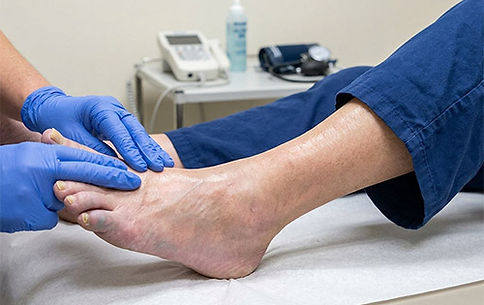
The feet are among the first places where the consequences of reduced arterial circulation become visible. The small arteries supplying the foot are among the most distal in the circulatory system — they receive blood last and are affected earliest when supply is reduced. A podiatrist examining the foot regularly observes the clinical signs of vascular compromise before they have produced serious complications: changes in skin temperature and color, reduced or absent pulses, thinning of the skin and loss of hair on the foot and lower leg, delayed wound healing, and nail changes that reflect chronic ischemia. These are not cosmetic changes — they are clinical signals that deserve prompt evaluation.
The most important symptom of PVD from the patient's perspective is often claudication — a cramping, aching, or burning pain in the calves, thighs, or buttocks that develops with walking a predictable distance and relieves promptly with rest. Patients frequently attribute claudication to arthritis, muscle fatigue, or 'just getting older' — and delay evaluation as a result. This delay is one of the most consequential mistakes in vascular medicine. The leg pain that appears after walking a block and disappears with rest is the vascular system signaling that the muscles are not receiving adequate blood flow. It is not normal aging.
More advanced PVD produces rest pain — pain in the foot and toes that is present even without activity, typically worse at night, and partially relieved by dangling the foot over the side of the bed. Rest pain indicates critical ischemia — the circulation is so compromised that the resting tissue cannot be adequately supplied. This is a medical urgency. A non-healing wound, ulcer, or area of tissue breakdown in a patient with PVD is a potential limb-threatening emergency — the impaired circulation that prevents healing creates a pathway for infection that can progress with frightening speed in the absence of adequate perfusion.
Dr. Gunter performs vascular assessment at every foot examination for at-risk patients — including pulse palpation, skin and temperature evaluation, and Ankle-Brachial Index (ABI) measurement when indicated. When the examination raises concern for significant vascular compromise, he does not wait. Prompt referral to vascular surgery for intervention assessment — angioplasty, stenting, or bypass — has saved digits and limbs in patients whose disease was identified and acted upon quickly. The podiatrist and vascular surgeon work together as a coordinated team in the management of PVD — and early communication between them is what produces the best outcomes for patients.
PVD SYMPTOMS THAT WARRANT PROMPT EVALUATION:
Early PVD:
• Leg or calf cramping that starts with walking and stops with rest
• Feet that feel cold or numb, especially at night
• Skin on the feet or lower leg that appears shiny, tight, or pale
• Loss of hair on the feet and lower legs
• Toenails that are thick, slow-growing, or discolored
Advanced PVD — seek evaluation promptly:
• Pain in the foot or toes at rest, especially at night
• Foot pain that eases when you dangle your leg over the bed
• A wound, sore, or ulcer on the foot that is not healing
• Skin that is turning pale, dark, blue, or black on the toes or foot
• A toe that is cold and discolored compared to the others
Do not wait to be evaluated if you have any of the advanced symptoms above.
PVD IS MORE COMMON IN:
-
Diabetes mellitus — major risk factor
-
Smoking — the single most modifiable risk factor
-
Hypertension
-
High cholesterol / dyslipidemia
-
Adults over 65
-
Family history of vascular disease or heart disease
-
Obesity
-
Prior cardiovascular events (heart attack, stroke)
Why Podiatric Evaluation Matters in Peripheral Vascular Disease
The podiatrist occupies a unique position in vascular disease management. Because the feet show the earliest and most visible signs of arterial insufficiency, a thorough podiatric examination — performed regularly in at-risk patients — functions as a vascular surveillance system. Patients whose circulation is declining may not yet have symptoms that bring them to a cardiologist or vascular surgeon, but the clinical signs in the foot are already present for a trained podiatrist to identify.
When Dr. Gunter identifies findings consistent with significant peripheral arterial disease, the response is prompt and coordinated. This is not a condition to monitor and reassess in three months. Depending on the clinical picture, the same-day or next-day response may include:
• Urgent referral to vascular surgery for hemodynamic assessment and imaging
• Coordination with the patient's primary care physician or cardiologist
• Wound evaluation and protection for any areas of skin breakdown
• Immediate footwear and pressure offloading guidance to protect compromised tissue
The speed of this coordinated response is what makes the difference between a patient who undergoes a timely revascularization procedure and preserves their limb, and a patient whose disease has advanced past the point where intervention can change the outcome. Dr. Gunter has seen both. The patients who do well are the ones who were evaluated and acted upon quickly.
Podiatric Management of Peripheral Vascular Disease
Podiatric management of PVD focuses on protecting the foot, monitoring for complications, and ensuring prompt vascular referral when the circulation is compromised to a degree that requires intervention. Dr. Gunter works as part of a coordinated care team — not in isolation.
Nail & skin surveillance
Regular podiatric monitoring of the nails and skin in PVD patients provides the ongoing surveillance that patients cannot reliably perform themselves — detecting early skin breakdown, pressure injuries, and nail changes that signal progression of vascular compromise. Every maintenance visit is a vascular surveillance opportunity.
Wound protection & offloading
For patients with PVD who have areas of skin breakdown or early ulceration, immediate pressure offloading and wound protection are critical to prevent progression. A wound that is small and manageable today can become limb-threatening within days in severely compromised circulation. Dr. Gunter provides wound care and offloading guidance while coordinating the vascular evaluation that addresses the underlying circulatory deficit.
Prompt vascular surgery referral
When clinical findings or ABI results indicate significant arterial compromise — particularly rest pain, non-healing wounds, or critical ischemia — Dr. Gunter initiates prompt referral to vascular surgery for hemodynamic assessment, imaging, and intervention evaluation. The referral is coordinated and communicated with urgency appropriate to the clinical picture. This is the most important action Dr. Gunter can take for a patient with advanced PVD.
Related conditions: Diabetic foot care · Peripheral neuropathy · Venous insufficiency · Nail & skin maintenance care
Why Patients Choose Dr. Gunter
✓
5,000+ Patients
Helped
✓
Same-Day
Appointments
Available
★
5.0 Average
Google Rating
✓
100% Focused
on Foot & Ankle
Frequently Asked Questions — Peripheral Vascular Disease
Concerned about circulation in your feet?
Prompt evaluation is the most important step.
Dr. Andrew Gunter, DPM evaluates peripheral vascular disease in the feet — assessing circulation, identifying clinical signs of compromise, and coordinating prompt referral to vascular surgery when the clinical picture calls for it. Serving San Antonio and surrounding communities. Same-day appointments available. Most insurance plans accepted.
Call (210) 581-9800