
/ CONDITIONS / TARSAL TUNNEL
Tarsal Tunnel Syndrome
Burning, tingling, and shooting pain along the inner ankle and into the sole of the foot — compression of the posterior tibial nerve at the tarsal tunnel. Often called the carpal tunnel syndrome of the foot. Evaluation and treatment in San Antonio, TX.
Andrew Gunter, DPM.
Call (210) 581-9800
What Is Tarsal Tunnel Syndrome?
The tarsal tunnel is a narrow passageway on the inner side of the ankle, formed by the medial ankle bones and roofed by the flexor retinaculum — a thick band of connective tissue. Within this tunnel run the posterior tibial nerve, the posterior tibial artery and vein, and the flexor tendons serving the toes. When the contents of this tunnel are compressed or the nerve is stretched, the result is tarsal tunnel syndrome — often called the carpal tunnel syndrome of the foot, because the mechanism parallels the median nerve compression at the wrist that most people are familiar with.
The posterior tibial nerve divides within the tarsal tunnel into the medial and lateral plantar nerves, which supply sensation to the plantar surface of the foot and motor function to the intrinsic muscles of the foot. Compression of the tibial nerve produces its characteristic symptoms in these distributions — burning, tingling, shooting, or aching pain along the inner ankle, into the arch, across the heel, and into the toes. Symptoms are typically worse with prolonged standing and walking and may wake patients from sleep in more severe cases.
The most common cause of tarsal tunnel syndrome is structural — anything that reduces the space within the tunnel or increases the tension on the nerve. Flat feet and overpronation are among the most significant biomechanical contributors: as the medial arch collapses during weight bearing, the calcaneus tilts outward, which stretches the tibial nerve across the medial ankle with every step. Space-occupying lesions within the tunnel — a ganglion cyst, varicose veins, lipoma, or bone spur — can also compress the nerve directly. Prior ankle fractures and chronic ankle swelling are additional predisposing factors.
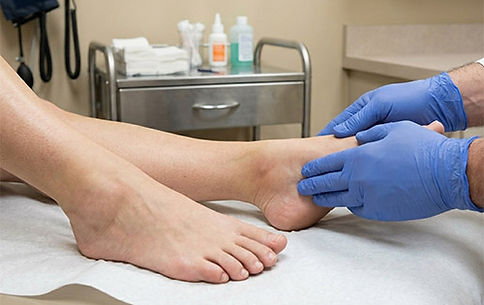
Tarsal tunnel syndrome is frequently misdiagnosed. Its plantar burning and heel pain can be confused with plantar fasciitis — and the two conditions can coexist. The neurological character of tarsal tunnel symptoms — burning, tingling, and radiation into the toes — distinguishes it from the mechanical morning heel pain of plantar fasciitis, though this distinction is not always clear to patients or to non-specialist providers. A positive Tinel's sign at the medial ankle — reproduction of the burning symptoms by tapping over the tarsal tunnel — is a reliable clinical finding. Electrodiagnostic testing provides objective confirmation of tibial nerve compression when the diagnosis is uncertain.
Dr. Gunter evaluates suspected tarsal tunnel syndrome with careful clinical examination, Tinel's testing, assessment of the foot's structural mechanics, and electrodiagnostic referral when indicated — arriving at an accurate diagnosis before recommending a management approach.
COMMON SYMPTOMS:
-
Burning, tingling, or shooting pain at the inner ankle
-
Pain radiating into the arch, heel, or toes
-
Numbness on the bottom of the foot
-
Symptoms worse with prolonged standing or walking
-
May worsen at night or wake from sleep
-
Positive Tinel's sign — tapping the inner ankle reproduces symptoms
-
Aching across the sole of the foot with activity
COMMON CAUSES:
-
Flat feet / overpronation — most common structural cause
-
Ganglion cyst or other space-occupying lesion in the tunnel
-
Varicose veins within the tarsal tunnel
-
Prior ankle fracture or chronic swelling
-
Bone spur impinging on the nerve
-
Inflammatory arthritis
-
Idiopathic — no identifiable structural cause in some cases
Treatment Options for Tarsal Tunnel Syndrome
Treatment depends on the cause of compression, the severity of nerve involvement, and the duration of symptoms. Addressing the underlying structural cause — particularly flat foot mechanics — is essential for durable outcomes.
Custom orthotics for pronation control
For tarsal tunnel syndrome driven by flat foot overpronation — the most common biomechanical cause — custom orthotics that control hindfoot valgus and support the medial arch reduce the dynamic nerve traction that occurs with every step. Orthotics are the primary conservative intervention for biomechanically-driven tarsal tunnel and are often sufficient to produce meaningful symptom relief.
Injection therapy
A corticosteroid injection placed precisely within the tarsal tunnel reduces perineural inflammation and provides both therapeutic relief and diagnostic confirmation — significant symptom relief following an accurately placed injection confirms the nerve as the source. Appropriate for moderate presentations and as an adjunct to biomechanical correction.
Bracing & activity modification
An ankle-foot orthosis or supportive bracing reduces the dynamic forces on the tarsal tunnel during activity and allows the nerve inflammation to settle. Activity modification that reduces prolonged standing and high-impact loading on the medial ankle supports recovery during the conservative management phase.
Surgical tarsal tunnel release
For confirmed tarsal tunnel syndrome that has not responded to comprehensive conservative management — particularly when electrodiagnostic testing confirms significant nerve compression — surgical release of the flexor retinaculum decompresses the tibial nerve and its branches.
Related conditions: Arch pain & flat feet · Ankle sprains & instability · Peripheral neuropathy · Nerve compression & entrapment · Custom orthotics
Why Patients Choose Dr. Gunter
✓
5,000+ Patients
Helped
✓
Same-Day
Appointments
Available
★
5.0 Average
Google Rating
✓
100% Focused
on Foot & Ankle
Frequently Asked Questions — Tarsal Tunnel Syndrome
Burning and tingling on your inner ankle and sole?
It may be tarsal tunnel syndrome.
Dr. Andrew Gunter, DPM evaluates tarsal tunnel syndrome — identifying the compression source, distinguishing it from plantar fasciitis and peripheral neuropathy, and recommending the most appropriate treatment from orthotics to surgical release when needed. Serving San Antonio and surrounding communities. Same-day appointments available. Most insurance plans accepted.
Call (210) 581-9800